
You can have a buyer who wants to move ahead and still have no idea what it’ll take to get the purchase approved.
Say you sell market research to a company weighing a move into a new segment. The head of sales likes your plan to interview buyers and find out how they make purchasing decisions. The CFO asks what decision those interviews would inform, what the study would cost, and whether the findings would be ready before the company commits to a sales hire. The head of sales can explain why the segment matters. They still need a case for funding the research.
I wrote about two pitches doing different jobs inside the same purchase. One helps the person closest to the problem see what would change. The other helps them make a case to whoever has to sign off. If you’re testing a sales approach, I’d want to know how that second conversation goes before asking a team to repeat the first one.
What the buying research can tell you
Who has influence. In Bain and LinkedIn’s survey of 515 technology buyers across seven industries, respondents assigned 49% of the influence over the final decision to people the researchers call hidden buyers. They include people in finance, procurement, and legal who weigh the cost and risk of choosing a vendor. LinkedIn’s Buyability guide
Where procurement fits. Forrester found that procurement professionals were among the decision-makers in 53% of business buying cycles and engaged from the start. Its 2026 report draws on a 2025 survey of nearly 18,000 business buyers around the world. Forrester’s findings · Survey background
When sellers enter. In 6sense’s study, buyers had a ranked shortlist before first seller contact in 91.4% of buying journeys. First contact came 59.2% of the way through an average 10.3-month cycle. The pre-contact favorite ultimately won 81.5% of the time, shown as 82% in the report summary. 6sense’s 2026 B2B Buyer Experience Report
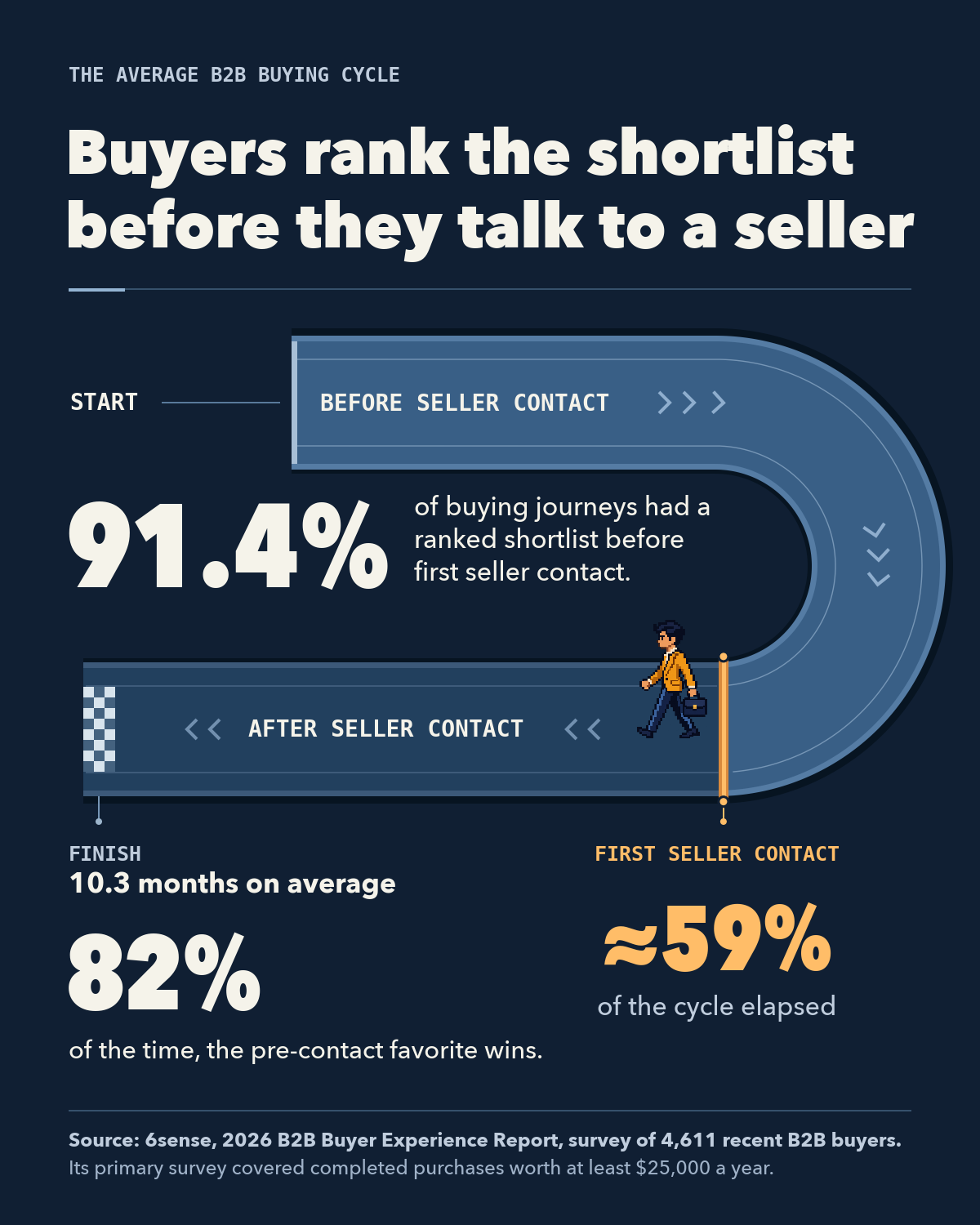
The studies cover different buyers and measure different things. 6sense’s primary survey covered completed purchases worth at least $25,000 annually. Its release reports 4,611 buyers across the overall study, and the number of respondents varies by measure. Who shaped the shortlist in your market, and when they weighed in, is something you can learn from the people who made a comparable purchase. 6sense methodology · Study release
Reconstruct a purchase that already happened
Start with someone who recently bought something comparable at the kind of company you want to sell to. If you can, talk with someone whose purchase stalled too. Ask them to walk you through the deal in the order it happened. As they walk through the decision, ask three things.
- Who weighed in, and who had to sign off? Get the roles and the order. A budget owner, a contract reviewer, and someone who can pause a purchase may each enter for a different reason.
- What did each person need to see? Ask for the actual question they raised. “Finance needed a business case” gets more useful when you find out they asked which investment decision the research would inform.
- What reached them, and through whom? Find out what the main contact forwarded or presented, whether the vendor joined the conversation, and what the approver did next.
Write down the approval step, the person involved, and the evidence that moved it forward or left it open. If you can speak with someone who reviewed the purchase, ask them what they received and what they still needed. You’ll have a clearer account of the handoff than you’d get from another opinion on your pitch.
Test one handoff in a live deal
Pick an approval step you heard about in a comparable purchase. You might give your contact a one-page brief that spells out the decision the research will inform, what the study will cost, and when the findings will be ready. Include what the team wants to learn about buyers before it puts a rep on the segment. Ask your contact whether the brief would answer the CFO’s questions and how they’d share it.
For a sponsored content program, the open question might be about reuse rights. A short explanation of where the client can republish the piece and for how long could be what the marketing lead needs to send to legal. The buyer’s actual question determines what you make and who needs to see it.
Then look for a step the buyer takes. Maybe finance asks for the cost assumptions, legal sends back a proposed change, or your contact puts the next review on the calendar with the person who owns it. Each gives you evidence about a specific step. Follow the deal through approval and purchase, and see whether the same approach works across similar accounts before building it into the sales playbook.
Sometimes the person who wants the work done also controls the budget. In that case, you can ask them directly what they need to make the decision. Start with the way your buyers bought last time and add detail where their process calls for it.
Before you ask someone else to repeat your sales approach, find out how the buyer gets from wanting to move ahead to getting the purchase approved.